
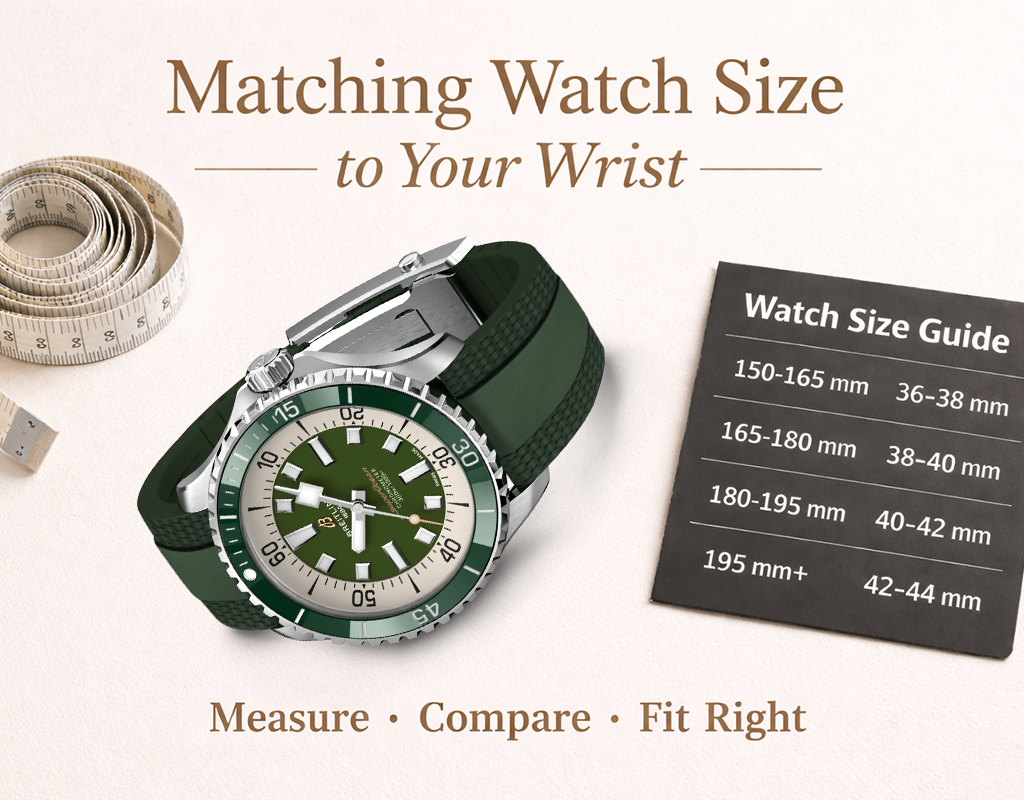
Choosing the right proportions begins with a clear watch size for wrist guide that explains balance, comfort, and everyday practicality. Understanding wrist dimensions helps people avoid watches that appear oversized or awkward during normal movement. Readers often overlook case diameter, lug distance, and thickness when they first explore watch styles. Proper sizing improves comfort while also maintaining visual harmony between the watch and the wrist. Consequently, learning sizing basics before buying simplifies decisions and prevents costly mistakes later.
Watch Size for Wrist Guide: Why Wrist Proportion Matters
Balance determines whether a watch feels natural or distracting during daily wear. Proportion influences how the dial, bezel, and lugs sit across the wrist surface. Smaller wrists usually benefit from moderate diameters that avoid extending beyond wrist edges. Larger wrists typically handle broader cases without creating visual imbalance. Additionally, lug length affects fit because long lugs stretch further along the wrist curve. Thickness also matters since tall cases feel heavier and more noticeable throughout the day. Therefore, a thoughtful watch size for wrist guide helps buyers interpret specifications correctly.
Measuring Your Wrist Before Choosing a Watch
First measure wrist circumference using a soft measuring tape placed comfortably above the wrist bone. Next record the measurement in millimeters to compare easily with watch case specifications. Many buyers discover that wrist measurements influence both diameter preference and lug-to-lug limits. Typically wrists under 165 mm suit smaller watches, while larger wrists accept broader designs. Furthermore accurate measurement helps narrow choices before exploring specific watch brands or models. Eventually shoppers gain confidence when sizing decisions rely on real numbers rather than guesswork.
Watch Size for Wrist Guide: Understanding Case Diameter
Diameter refers to the width of the watch case measured across the dial. Generally most modern watches range between 36 mm and 44 mm. For clarity the table below summarizes common wrist and diameter pairings.
| Wrist Circumference | Suggested Case Diameter |
|---|---|
| 150–165 mm | 36–38 mm |
| 165–180 mm | 38–40 mm |
| 180–195 mm | 40–42 mm |
| 195 mm+ | 42–44 mm |
Importantly these numbers remain guidelines rather than strict rules. However a practical watch size for wrist guide uses ranges like these to simplify comparisons. Likewise dial design can visually enlarge or reduce the perceived size.
Lug Distance and Why It Changes Fit
Lug-to-lug distance measures the total length between the upper and lower strap attachment points. Many enthusiasts consider this dimension even more important than diameter. Shorter lugs keep the watch centered without hanging over the wrist edge. Longer lugs sometimes create imbalance even when the diameter appears moderate. Meanwhile curved lugs improve comfort because they follow the natural wrist shape. Careful evaluation of lug length therefore strengthens any sizing decision.
Watch Size for Wrist Guide: Considering Thickness and Style
Thickness influences how a watch feels under sleeves or during active movement. Slim watches slide easily under cuffs and often suit professional environments. Sport watches frequently appear thicker because they include stronger cases and rotating bezels. Examples such as Breitling Navitimer, Chronomat, Superocean, and Avenger illustrate different style proportions. Each model demonstrates how design purpose affects case thickness and overall wrist presence. Accordingly a complete watch size for wrist guide always considers both width and height.
Visual Balance Between Watch and Wrist
Visual harmony depends on several elements working together rather than one measurement alone. Color contrast between strap and dial can subtly affect perceived size. Large numerals or wide bezels sometimes make identical diameters appear noticeably larger. Conversely minimal dials often feel smaller even when specifications remain unchanged. Another useful watch size for wrist guide tip suggests viewing watches from arm’s length. Such perspective reflects how others typically see the watch during conversation.
Watch Size for Wrist Guide: Practical Selection Tips
Ultimately comfort should guide every decision before style preferences dominate. Several practical steps simplify the process:
Measure wrist circumference accurately.
Compare diameter and lug-to-lug measurements together.
Check case thickness relative to daily clothing.
View watches from normal standing distance.
Meanwhile many buyers continue refining their preferences after trying different case proportions and strap styles in daily situations. Gradually experience helps individuals recognize which dimensions feel balanced during work, travel, and casual activities. Our Breitling watch supports confident choices by aligning watch proportions naturally with the wearer’s wrist.
