
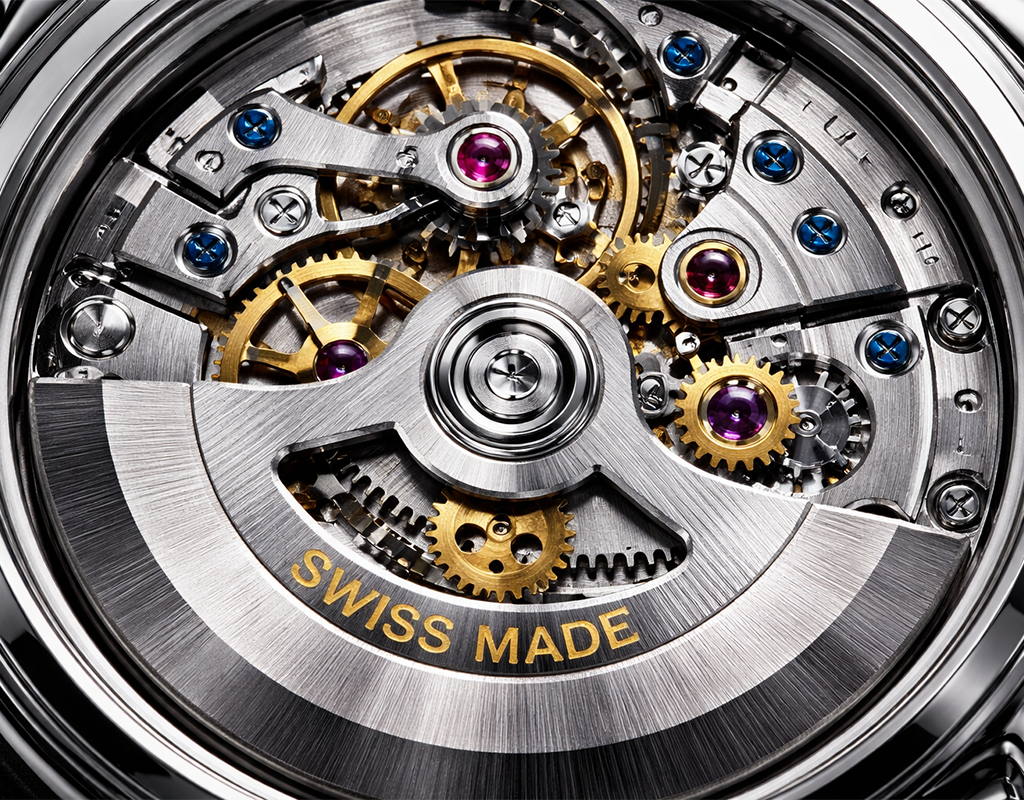
Watch Movement Guide
The movement is the core component of a watch.
It determines timekeeping stability, durability, and maintenance needs.
This guide explains the movement options used in our watches and how to choose the right one for your usage and budget.
Types of Watch Movements
We offer several movement configurations depending on the model and production batch.
Asian Movements (Standard Option)
Asian movements are commonly used in standard configurations.
Key characteristics:
Reliable for everyday use
Cost-efficient
Widely used across many watch models
They provide a balanced option for buyers seeking good performance at a moderate price.
Japanese Movements (Improved Stability)
Japanese movements are selected for models requiring stronger timekeeping consistency.
Typical advantages include:
Stable timekeeping performance
Smooth and consistent operation
Suitable for frequent wear
They are often recommended for users who plan to wear the watch regularly.
Swiss Movements (High-End Option)
Some models may offer Swiss movement upgrades.
Characteristics:
Higher precision components
Enhanced stability
Often chosen for premium configurations
Movement availability may vary depending on the specific watch model.
How to Choose the Right Movement
Movement selection mainly depends on three factors:
1. Budget
Different movements have different cost levels.
General guidance:
Entry level → Asian movement
Mid-range → Japanese movement
Premium option → Swiss movement
This structure helps balance price and performance.
2. Wearing Frequency
Usage habits influence movement choice.
Occasional wear: Standard movements are usually sufficient.
Frequent daily wear: A more stable movement may be preferable.
Frequent wear benefits from improved durability and consistent timekeeping.
3. Personal Preference
Some buyers prioritize precision, while others prioritize affordability.
Understanding your own expectations helps determine the most suitable option.
For additional details on durability and daily usage conditions, you may also review our guide on proper watch protection and performance under daily conditions.
Movement Testing Process
Each watch undergoes basic functional checks before shipment.
Testing focuses on several key aspects:
Timekeeping Accuracy
The watch is checked for reasonable time deviation during operation.
This helps ensure stable daily performance.
Power Reserve
Power reserve refers to how long the watch runs after being fully wound.
Adequate reserve ensures reliable operation during normal use.
Winding Efficiency
The winding system is checked for proper energy transfer.
Efficient winding supports consistent movement operation.
Second Hand Smoothness
The motion of the seconds hand is visually inspected.
This helps verify stable movement operation and proper assembly.
Please note that the actual adjustment and winding methods of our watches may differ from genuine reference models. If you are unfamiliar with movement operations, contact customer service for professional guidance in advance. Functional damage to the movement caused by improper manual operation is classified as human-induced damage and will not be covered under our 2-year free warranty. Any required repair will incur separate spare part and labor charges.
Movement Transparency
Movement information is presented transparently.
Our approach follows three principles:
Do not mislabel movement origin
Do not claim “fully Swiss” unless applicable
Clearly describe the movement configuration used
This helps buyers understand exactly what they are purchasing.
If you want to learn more about our inspection standards, you can also review our overview of how watches are checked before shipment.
Summary
Choosing the right movement depends on your expectations and usage habits.
In general:
Asian movements provide reliable standard performance.
Japanese movements offer improved stability for regular wear.
Swiss movements serve as a premium upgrade option.
Understanding these differences helps you select the most appropriate watch configuration for your needs.
Our 2-year limited warranty only covers factory original movement defects such as inherent timekeeping faults. Damage to internal movement parts resulting from incorrect winding, improper time adjustment or self-disassembly is excluded from free warranty service.
